Showing posts with label Bank of New York Mellon. Show all posts

Tuesday, October 28, 2014

AWESOME: FLORIDA APPELLATE COURT REVERSED AND REMAND FOR DISMISSAL BURDESHAW V. BANK OF NEW YORK MELLON FINAL JUDGMENT OF FORECLOSURE

Bank of New York Fails Test for Business Records – Fla. 1st DCA

For further information, assistance or consultation please call 954-495-9867 or 520-405-1688.
———————————–
The Burdeshaws appeal the final judgment of foreclosure in favor of The Bank of New York Mellon (“BNYM”), contending that the evidence to support the amount of indebtedness was inadmissible hearsay and thus, no admissible evidence supported the trial court’s determination of the amount due. In addition to reversal of the final judgment, the Burdeshaws seek remand of this case with instructions to dismiss, based on a meritorious motion pursuant to rule 1.420(e), Florida Rules of Civil Procedure, taken under advisement by the trial judge and denied de facto when the court eventually conducted a bench trial and issued a final judgment. We agree on both points, reverse the final judgment of foreclosure, and remand for dismissal of the action.
The Burdeshaws filed their notice of inactivity, pursuant to rule 1.420(e), on July 20, 2010. After sixty more days with no record activity, on September 20, 2010, the Burdeshaws filed their motion to dismiss. Other than this notice and motion, no paper was filed in the court file by either party or the court between September 16, 2009 and October 4, 2010.
Suntrust did not file a response to the motion to dismiss for lack of prosecution but did file other papers in the record on October 4, 2010, and thereafter. A motion hearing was held on November 8, 2010, and one of the motions considered by the court was the Burdeshaws’ motion to dismiss under rule 1.420(e). The record does not contain a transcript of this hearing and Suntrust did not file a written assertion of good cause why the action should have remained pending. In the order entered November 29, 2010, the court stated that it was taking the rule 1.420 motion to dismiss “under advisement.”
BNYM was substituted as party plaintiff on January 25, 2013, and a bench trial took place on May 13, 2013. In support of its documentary evidence, BNYM presented the testimony of Nancy Johnson, twenty-two year Suntrust employee currently in the position of “default proceedings officer.” She testified that Suntrust was servicing the loan and that she had reviewed Suntrust’s records in preparation for the trial. Counsel for BNYM inquired about the documents it sought to admit into evidence, including the letter notifying the Burdeshaws of the default, the note and mortgage, and a “computer printout from Fidelity system” purporting to show the transactions on the account and the balance owed. Counsel for the Burdeshaws objected to Ms. Johnson’s testimony regarding each document in turn, stating that there was no predicate for Johnson’s testimony, that BNYM had not established any of the elements to qualify her as the custodian of the records, and that BNYM had not otherwise qualified Ms. Johnson to authenticate the computer-generated records. The trial court overruled each objection until eventually, counsel requested “a standing objection, so I don’t keep making it,” which was granted.
On cross examination, Ms. Johnson explained that her knowledge of the amounts owed came from her review of the printout and that the printout was “on our system.” When asked by whom or how fees and expenses were posted to the account, Johnson testified that “everyone” was using the Fidelity system and “they would input any transactions, any adjustments.” Ms. Johnson stated that she had reviewed the numbers on the printout theThursday of the week prior to trial and that the initial principle balance of the loan “would have been input by someone handling the origination of the loan.”
It is true that defense counsel did not use the words “hearsay” or “section 90.803(6), Florida Statutes” in his objections. However, he did challenge BNYM’s failure to establish “the steps to make her a records custodian,” the “complete lack of predicate to establish her bona fides at least to authenticate the document,” and he offered “to provide the court with some law on what a records custodian has to establish.” The context of the objections to the witness’ testimony about the records in this case made it clear to the court and to opposing counsel that the objection was directed towards the admission of computer-generated hearsay documents due to the plaintiff’s failure to establish any of the grounds required for the business records exception to the hearsay rule under section 90.803(6).
Furthermore, because Ms. Johnson was the only witness to authenticate the only documentary evidence to support the amount owed at a bench trial, rule 1.530(e), Florida Rules of Civil Procedure, allows Appellants to challenge the sufficiency of the evidence on appeal even without the repeated objections made by counsel. Although a failure to object is not a prudent or advisable practice, Appellants’ challenge to the sufficiency of the evidence to support the judgment is cognizable on appeal pursuant to rule 1.530(e) regardless of the specificity of defense counsel’s numerous objections during the bench trial. The rule provides:
When an action has been tried by the court without a jury, the sufficiency of the evidence to support the judgment may be raised on appeal whether or not the party raising the question has made any objection thereto in the trial court or made a motion for rehearing, for new trial, or to alter or amend the judgment.
See also Wolkoff v. Am. Home Mtg. Servicing, Inc., 39 Fla. L. Weekly D1159, 2014 WL 2378662, at *1 (Fla. 2d DCA May 30, 2014) (“The Wolkoffs were not required to make a contemporaneous objection to the sufficiency of the evidence in order to preserve the issue for appeal.”). Accordingly, Appellants’ challenge to the sufficiency of the evidence to support the final judgment of foreclosure, due to the failure of BNYM to establish the business records exception to the hearsay rule for the documents upon which the judgment is based, is properly before this Court.
if not properly authenticated, loan payment history printouts and other evidence of the amount due on a loan are inadmissible hearsay. For example, in Glarum, the court reversed summary judgment for the bank because the bank’s sole witness testified from a bank printout without first establishing the hearsay exception for business records. There, the witness/affiant was a “specialist” for the loan servicer and his affidavit stated that he obtained the amount of indebtedness from “his company’s computer system.” Id. at 782. However, the specialist “did not know who, how, or when the data entries were made into [the servicer's] computer system” and “could not state if the records were made in the regular course of business.” Id. The specialist had even less knowledge about the business practices of the prior loan servicer, the apparent source of the data upon which his own company relied to open the file. Accordingly, both the witness’ testimony and the affidavit containing the data for the amount owing were inadmissible hearsay, unqualified for the business records exception under section 90.803(6)(a). Because there was no other competent evidence to prove the amount due and owing, summary judgment was reversed.
This Court reversed the final judegment of foreclosure in Mazine v. M & I Bank, 67 So. 3d 1129 (Fla. 1st DCA 2011), due to the erroneous admission of an affidavit of the amounts due and owning. The bank’s witness at the bench trial was “the regional security officer” for the bank, who “candidly admitted that he had no knowledge as to the preparation or maintenance of the documents offered by the bank,” “did not know if the source of the information contained” in the record was correct, and “did not know if the amounts reported in the affidavit were accurate.” Mazine, 67 So. 3d at 1132. Because the affidavit was the only evidence supporting the amount of defendants’ default, admission of the document was harmful error requiring reversal of the judgment of foreclosure.
The final judgments of lien foreclosure were reversed in Yang v. Sebastian Lakes Condo. Ass’n Inc., 123 So. 3d 617 (Fla. 4th DCA 2013), because the current management company’s witness had no knowledge of the starting balance of the loan, never worked with the original accountant, and had no knowledge of how the original figures were entered into the ledgers. Over objection to the hearsay account ledgers as not properly authenticated via the business records exception, the trial court admitted the ledgers. These documents were the only support for the amounts owed. Finding that the foundation for admitting the ledgers into evidence was lacking, the appellate court reversed the final judgment of foreclosure.
While this appeal is not based on a challenge to BNYM’s standing to foreclose, the business records exception to the hearsay rule as set out in section 90.803(6)(a) was applied to proof of standing in Hunter v. Aurora Loan Services, LLC, 137 So. 3d 570 (Fla. 1st DCA 2014). There, Aurora offered into evidence “certain computer-generated records” pertaining to transfers of the note and mortgage. Hunter, 137 So. 3d at 571. The printouts contained no indication that they were prepared by the original lender, MortgageIT, and Aurora attempted to authenticate the documents through the testimony of Mr. Martin, an employee of the servicer of the loan at the time of trial.
Regarding notations on the computer printouts, Mr. Martin “had no knowledge about who generated the notations, or how and where that individual obtained the information. Neither did he have such knowledge about the Account Balance Report.” Id. at 572. He could not testify from personal knowledge that either document belonged to or was generated by the original lender but he did testify that the computer program from which the notes log originated was “used across the industry, that a records custodian for the loan servicer is the person who usually inputs such notes, and that normal industry practice is for a lender’s accounts payable department to create an account balance report reflecting a zero balance on the loan when it is sold to another entity.” Id.
This Court found that Mr. Martin’s testimony was insufficient to “establish the necessary foundation for admitting the Account Balance Report” and the other documents under the business records exception. Hunter at 573. The witness was never employed by the original lender and lacked “particular knowledge of MortgageIT’s record-keeping procedures.” Id. “Absent such personal knowledge, he was unable to substantiate when the records were made, whether the information they contain derived from a person with knowledge, whether MortgageIT regularly made such records, or, indeed, whether the records belonged to MortgageIT in the first place. His testimony about standard mortgage industry practice only arguably established that such records are generated and kept in the ordinary course of mortgage loan servicing.” Id.
In this case, BNYM failed to establish any foundation qualifying the printout Ms. Johnson read as a business record and failed to establish any foundation qualifying Ms. Johnson as a records custodian or person with knowledge of the four elements required for the business records exception. See Yisrael, 993 So. 2d at 956. Accordingly, the admission of Ms. Johnson’s testimony about the loan balance and the admission of the computer printouts she was called to authenticate, over the objections of opposing counsel, constituted reversible error. Johnson’s only knowledge about the amount due and owing came from her review of the computer printouts and she had no information about how and when those records had been prepared or where the data came from. Her testimony that “everyone” was using the Fidelity system and “they would input any transactions, any adjustments” is comparable to the witness’ testimony in Hunter about general mortgage industry practices. Ms. Johnson’s assumption that the original loan amounts “would have been input by someone handling the origination of the loan” was merely supposition, based on her general knowledge of ordinary mortgage industry practices, not any specific knowledge about this debt or the transaction of the information between the original lender and subsequent servicers, including Suntrust. She was thus unable to show any of the requirements for establishing a proper foundation for the amounts or the documents she relied on.
Under these circumstances and considering the testimony elicited from the witness in this case, the admission of BNYM’s composite exhibit 3 was reversible error and no other evidence was presented to support the amount owed on the note. Because there is no evidence to support the amounts contained in the final judgment, reversal is required.
Finally, although it might be appropriate to remand for further proceedings under other circumstances, this case does not present a reason to afford BNYM additional time and another opportunity to prove its case. As the Second District has held “[a]ppellate courts do not generally provide parties with an opportunity to retry their case upon a failure of proof.” Wolkoff, 2014 WL 2378662, at *3. The complaint initiating this action was filed in 2009. The defendants’ motion to dismiss for lack of prosecution, filed in 2010, was supported by the absence in the record of any activity in the file for the time periods set out in rule 1.420(e), and by the absence of an assertion by the plaintiff of good cause, or any cause, prior to the hearing on the motion, for the action to remain pending. As noted in Wilson v. Salamon, 923 So. 2d 363, 368 (Fla. 2005), and Metro. Dade Cnty. v. Hall, 784 So. 2d 1087 (Fla. 2001), the mandatory language of the rule — “the action shall be dismissed” — leaves the trial court with no discretion in the matter. “There is either activity on the face of the record or there is not.” Metro. Dade Cnty v. Hall, 784 So. 2d at 1090.
Accordingly, the final judgment of foreclosure is reversed and this cause is remanded for entry of an order of dismissal of the case. (VAN NORTWICK and ROBERTS, JJ., CONCUR.)

Tuesday, October 14, 2014

OH, RHODE ISLAND SUPREME COURT, WHY, WHY, WHY? WHAT CAN YOU POSSIBLY BE THINKING?

Is the End Near for MERS Litigation in Rhode Island?


DISCLAIMER: Because of the generality of this update, the information provided herein may not be applicable in all situations and should not be acted upon without specific legal advice based on particular situations.
© Bradley Arant Boult Cummings LLP 2014 | Attorney Advertising

Friday, August 26, 2011

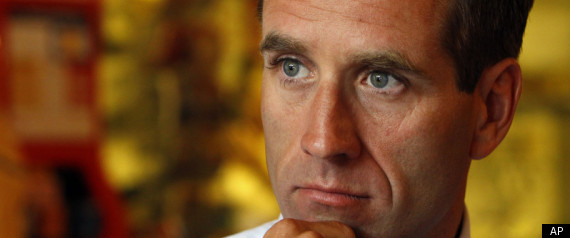
BEAU BIDEN, GOOD MOVE.


Beau Biden, Delaware AG, Moves To [Intervene in the proposed] Bank Of America Mortgage Deal, Signaling Concerns

Beaubiden
First Posted: 8/5/11 06:22 PM ET Updated: 8/5/11 06:57 PM ET
WASHINGTON -- Delaware Attorney General Beau Biden signaled his intent Friday to intervene in a proposed $8.5 billion settlement over troubled mortgage securities between Bank of America and a group of investors, uniting with his New York counterpart Eric Schneiderman, who argued a day earlier that the deal is unfair and its participants committed fraud.
Ian McConnell, director of Biden's consumer protection unit, told a New York state judge that the state of Delaware intends to file paperwork early next week asking to become a full party in the suit. If granted, that status would allow the state to comment on and question virtually every move "from start to finish" as Bank of America and the investors attempt to end their multi-billion dollar spat.
It would also give Delaware the right to investigate the claims the deal strives to settle, like whether the lender and the other bank involved in the case, Bank of New York Mellon, followed state law when creating these mortgage securities, and when they moved to foreclose on homeowners who defaulted on their obligations.
The two attorneys general represent states whose laws govern nearly all mortgage securitization trusts, vehicles that bundle home loans and issue notes to investors. Both offices have teamed up to investigate allegations that Wall Street firms failed to properly assemble loan documents in accordance with their states' laws when creating mortgage securities.
Schneiderman, New York's attorney general, argued in court papers Thursday that the bank overseeing the trusts, Bank of New York Mellon, "knowingly, repeatedly, and consistently" misled investors into thinking that the mortgage bonds were created properly. The bank also put its own interests before those of the investors it was supposed to be representing, he said.
BNY Mellon, one of the largest U.S. banks by assets, engaged in "repeated fraud and illegality," Schneiderman charged, which occurred "literally hundreds of times."
Schneiderman linked the paperwork failures to the foreclosure crisis, arguing that the alleged shortcomings in gathering and processing documents effectively had led to "foreclosure fraud," like in cases that involved so-called "robo-signing."
A BNY Mellon spokesman called Schneiderman's charges "baseless." McConnell declined to comment on Schneiderman's allegations.
The action by Schneiderman and Biden threaten the proposed accord between BofA and 22 of the world's most prominent investors. The investors had demanded Bank of America repurchase home loans packaged into 530 mortgage trusts with a original loan balance of $424 billion. The proposed $8.5 billion payout represents less than 4 cents on the dollar of the current unpaid balance, or about $220 billion, according to Bank of America's most recently quarterly filing with the Securities and Exchange Commission.
McConnell said in a phone interview that 527 of the trusts were created per New York law. The remaining three are governed by Delaware law, he said.
"We have enough information to think we have reasons to be concerned," McConnell said. "There may be serious issues regarding conflicts and concerns over the general value proposition of the deal for Delaware investors."
Bank of America is effectively indemnifying BNY Mellon for costs and liabilities arising from its duties as trustee. Some investors not party to the current deal have charged that BNY Mellon has a conflict of interest. New York's top law enforcement officer agrees.
"There's a paucity of information," McConnell said of the settlement deal and of how the final dollar figures were derived. "We'd be in a position to gather more information" when Delaware joins the suit, he added.
Countrywide Financial, the nation's largest mortgage lender when purchased by BofA in 2008, failed to properly pool loan documents needed for the creation of mortgage securities, and BNY Mellon effectively looked the other way in its role as overseer of these instruments, Schneiderman said in court documents. This "apparently triggered widespread fraud," he said.
BNY Mellon should have known the mortgage securities were improperly created because the evidence was "abundant," Schneiderman said, citing the bank's own documents, news coverage of the issue and foreclosure actions brought on BNY Mellon's behalf.
In addition, Schneiderman accused Bank of America of fabricating the missing documents when it came to foreclosing on homeowners who defaulted on their loans.
If the settlement is not finalized, Bank of America's future mortgage-related losses could be "substantially different" than what the lender has set aside and already braced investors for, the bank said in its filing.
Shares of Bank of America, the largest U.S. bank by assets, touched $8.03 in New York trading on Friday, a 52-week low. They're down 26 percent over the past month.
The cost to protect Bank of America's bonds against default have surged more than 17 percent since last Friday, according to Markit.
It now costs $207,000 to protect $10 million of BofA's debt, as of Friday's close. Last week, it cost just $176,000. The price of credit protection generally increases as investor confidence deteriorates.


Enhanced by Zemanta

ZERO HEDGE: FOLLOW THIS BLOG!


BofA's $8.5 Billion Settlement
Could Fall Apart
After Request Made To Move
Mortgage Case
From State To Federal Court

Tyler Durden's picture


As most know by now, the ridiculously low $8.5 billion putback settlement, which was supposed to have been closed by now, and which was the key driver in preventing Bank of America from trading far, far lower (and requiring much more capital), is the wildcard that would allow the bank to package tens if not hundreds of billions of claims against the bank in a "tidy (and very small) little package." The key factor allowing this settlement to be structured in its existing form, was that the lawsuit was filed in New York State Court, which allows for a little something known as Article 77, or a provision permitting "special proceeding related to express trust." The details are provided below, but in essence boil down to the following: the settlement in its current form can only be enacted if the lawsuit is conducted under New York State law. Well, minutes ago, David Grais, attorney for Walnut Place, which as we have repeatedly observed represents those interests who claim the $8.5 billion settlement is massively insufficient and are engaged in litigation seeking far greater recoveries, filed a request to transfer the lawsuit from State Court to Federal Court where everything basically begins a new. More than anything, this latest development may explain why Bank of America has been scrambling to raise tens of billions in the open market as an adverse court decision, one granting Grais' request, means the bank is suddenly open to unlimited downside capital risk. In the meantime, add major litigation headline risk to everything else that BAC has going for it...
Manal Mehta explains why this could be a gamechanger:
If this happens, basically renders the Article 77 irrelevant. Article 77 is a New York Statute.  Bank of America wanted to use Article 77 to make the settlement binding upon all 530 trusts including those who objected to the settlement.  Class action in Federal Court allows parties to opt out of the settlement.
And here is Reuters' Allison Frenkel explaining the nuances of Article 77:
There was a lot of chest thumping Wednesday by noteholders who don't like the proposed $8.5 billion settlement between Bank of America and investors in securities backed by Countrywide mortgages. Bill Frey of Greenwich Financial, a firm that structures asset-backed securities, told Tom Hals of Reuters that he had been "bombarded" with e-mails from angry Countrywide noteholders. He's urging them to rise up in opposition to the settlement proposal. "If investors were to open their mouths," Frey told Hals, "they can push for a better and fairer settlement, or they can get two cents on the dollar like they are getting."

Good luck with that.

The lawyers who structured the BofA settlement saw such protests coming from a mile away and armored the deal against them. Their most powerful defense? The New York state law they chose as a vehicle for judicial approval of the settlement: Article 77, which provides for a "special proceeding related to express trust."

It's a creative use of the law, to say the least. Article 77, which allows a trustee to seek a judicial endorsement of trust-related decisions, is usually invoked in garden-variety trust disputes, not $8.5 billion deals affecting hundreds of trust beneficiaries. But the Countrywide securitizations that the BofA settlement addresses were offered via 530 different trusts, making trust law a legitimate prism through which to assess the proposal. Moreover, there is precedent for using Article 77 to win court approval of decisions by trustees in commercial cases, according to a brief filed in conjunction with the BofA agreement, which cites a 1998 case called In re Application of IBJ Schroder Bank & Trust Co.

The lawyers who put together the BofA deal-- principally Kathy Patrick and Robert Madden of Gibbs & Bruns (for a large investor group); Ted Mirvis of Wachtell, Lipton, Rosen & Katz (for Bank of America); and Jason Kravitt and Matthew Ingber of Mayer Brown (for Bank of New York Mellon, the trustee in the securitizations)-weighed all kinds of options for obtaining judicial approval of the settlement. They considered state and federal courts in various jurisdictions, but ultimately came to a consensus that an Article 77 proceeding made the most sense, even though the law had never been applied to any trust matter of this scope and size "You could think of this as 530 trusts all being heard," said Madden of Gibbs & Bruns. "It's very pragmatic."

It's also weighted in favor of deal supporters. Here's the beauty of the Article 77 vehicle for BofA and BoNY: Under trust law, the bar for blocking a decision by the trustee is incredibly high. Anyone with an interest in the trust has a right to challenge the trustee's decision. But unless objectors can show that the trustee, in this case BoNY, abused its discretion, acted unreasonably, or otherwise breached its fiduciary duty to the trusts' beneficiaries, the court is not supposed to interfere with the trustee's power.

That's a tough standard to meet for anyone who doesn't like the proposed BofA deal. The trust contracts signed by investors in the Countrywide securitizations clearly state that the trustee, BoNY, has the power to enforce the terms of the trust. The contracts don't expressly give BoNY the power to settle claims-which may be an avenue of attack on the deal for challengers-but New York case law provides considerable precedent. So assuming the court agrees that the trustee has the power to settle on behalf of noteholders, the judge's only inquiry is whether the trustee acted unreasonably.

In their petition requesting approval of the deal, BoNY's lawyers from Mayer Brown lay out all of the precautionary measures the trustee took to assure a reasonable settlement. Among other steps, BoNY brought in five expert consultants to opine on the legal and practical considerations any trust-by-trust litigation against Bank of America would entail. The expert opinions led the trustee to a determination that the most noteholders could get by litigating against the bank was $8.8 to $11 billion--and that's without discounting for any of the defenses BofA could raise. "A settlement payout of $8.5 billion is viewed by the trustee as falling within a small variance of that pre-discounted settlement range," the petition says. Weighed against the uncertainty of years-long litigation, it's going to be very difficult to show that an $8.5 billion settlement-in which investors retain their notes, as well as potential securities law claims-is an unreasonable abuse of the trustee's discretion.
And the just released court filing.
5
Your rating: None Average: 5 (1 vote)


Similar Articles You Might Enjoy:

Fri, 08/26/2011 - 12:57 | Link to CommentCognitive Dissonance
Cognitive Dissonance's picture
This bankster bad dream just will not end. It's gonna take a national security order to kill thisbedroom boardroom monster.
Fri, 08/26/2011 - 13:01 | Link to CommentWALLST8MY8BALL
WALLST8MY8BALL's picture
Were walking down a lonely road
Clear to us now but  was never told
Trouble with dreams is you never know
When to hold on and when to let go
This is the life that we must lead now
Crossing fingers and wiping brow
Trouble with dreams is you can't pretend
Something with no beginning has an end
Fri, 08/26/2011 - 13:28 | Link to CommentThomas
Thomas's picture
One thought I had was that maybe WB has also sorts of escape clauses and his seemingly generous donation was far less secure than presented in the press.
Fri, 08/26/2011 - 13:51 | Link to CommentNotApplicable
NotApplicable's picture
My guess is that he's taking one for the team today in order to generate goodwill tomorrow towards a tumultus future for WF.
Fri, 08/26/2011 - 14:03 | Link to Commentspanish inquisition
spanish inquisition's picture
Uncle Warren has not balance sheet account called goodwill. I will bet portions of agreeement not made public yet put him first in line should things go south. Maybe a couple of key assets will be concidered paid in full as security should BoA default.
Fri, 08/26/2011 - 13:00 | Link to Commentunwashedmass
unwashedmass's picture
BofA gets away with this crap we might as well scrap the entire judicial system and just acknowledge the banks now rule our country.
Fri, 08/26/2011 - 13:06 | Link to CommentBring the Gold
Bring the Gold's picture
Wait, we should just NOW acknowledge this? I put 2 and (insert irrational number) together and got = "holy $%^& the banks run this joint" after Hank "Tanks in the Streets" Paulson rammed TARP through congress against the wishes of somewhere on the order of 90% of Americans. Anyone arriving at this conclusion now must have had the banker teet so far down their throat it was denying oxygen to the brain.
Fri, 08/26/2011 - 13:29 | Link to CommentThomas
Thomas's picture
Yup. We passed that mile marker quite some time ago.
Fri, 08/26/2011 - 13:35 | Link to CommentPiranhanoia
Piranhanoia's picture
It isn't the judicial system.  That is the one place we still have real people that follow the law.  It doesn't always happen that way and there are bad ones, but the good outnumber the bad.   And,   It is the last hope we have because the supremes, congress and the executive are bought and paid for.   This is going to have massive political interference from the corrupt.  But even they can't stop an honest judge.
Only an independent judiciary can give us any hope.  Ain't it sad we are down to hope?
Fri, 08/26/2011 - 14:20 | Link to CommentHavana White
Havana White's picture
Yes, it's very sad we're down to hope.  It's horrifying.
Fri, 08/26/2011 - 13:01 | Link to CommentSeasmoke
Seasmoke's picture
Pandoras Box has been opened, it can never be closed .........no matter what they try to do, it will not work out for them.......the ramifications of this will be talked about 100 years from now

Moral Hazard , now that is a real Bitch !
Fri, 08/26/2011 - 13:01 | Link to CommentCatullus
Catullus's picture
That anyone believes Bank of New York Mellon could possibly act in good faith stretches the bounds of rationality. But that's exactly why it'll pass.
Just say it again Countrywide bondholders "2 cents on the dollar". "2 cents on the dollar." "2 cents on the dollar."
Fri, 08/26/2011 - 13:05 | Link to CommentQuackking
Quackking's picture
Once again, ZH leads the "journalist" pack by about a hundred miles.. Ahem, did I say "journalist" when referring to CNBC, etc? I apologize.

Thx, TD. You guys rule.
Fri, 08/26/2011 - 13:17 | Link to CommentCognitive Dissonance
Cognitive Dissonance's picture
The so called 'journalist' pack cannot be considered reporters. They are for the most partrepeaters.
No matter what is stuffed in their mouths, they have no problem spitting it back out. This way they never become pregnant with new ideas. Or (God forbid) contaminated with the truth.
Fri, 08/26/2011 - 13:12 | Link to Comment--Freedom--
--Freedom--'s picture
I love it. One of the cnbc guys just said that after the initial drop this morning, stocked "decided to man up."
Classic.
What's next?
Fri, 08/26/2011 - 13:34 | Link to CommentSheepDog-One
SheepDog-One's picture
Probably a -300 point plunge.
Fri, 08/26/2011 - 13:18 | Link to Commentunionbroker
unionbroker's picture
In the American economy, the only thing that's really lacking right now is confidence," said David Kelly, chief market strategist at JPMorgan funds. Kelly said the Fed has few remaining options to help the economy, but action by the central bank might not be necessary. ha ha ha ha
Fri, 08/26/2011 - 13:30 | Link to CommentThomas
Thomas's picture
Kelly lives at the end of the Skittles rainbow. He always sounds like a Stepford Strategist.
Fri, 08/26/2011 - 13:25 | Link to CommentSurly Bear
Surly Bear's picture
Chapter 11 would solve everything.
Fri, 08/26/2011 - 13:27 | Link to Commentslewie the pi-rat
slewie the pi-rat's picture
as i've been posting, i smell a fix somewhere.  not infederal court? with a new 'start'? 
oh, yes, we at Paulie Walnut Place for greedy lawyers, thinkwe should take this into "newness" for you poor bastards who will never get paid.  trust us!  we're lawyers!  and we're here to help!
Fri, 08/26/2011 - 13:35 | Link to CommentDowntoolong
Downtoolong's picture
Moynihan to Buffett – “Psych, who’s got who trapped by the balls now sucka? Welcome to my world.”
Fri, 08/26/2011 - 13:35 | Link to CommentSheepDog-One
SheepDog-One's picture
Banks in deep shit, economy screwed, 1% GDP at best....hey I know lets stage a +200 DOW rally!
Fri, 08/26/2011 - 14:05 | Link to CommentMercury
Mercury's picture
What kind of precedent is there for a putback of anywhere near 100 cents on the dollar for the RMBS in question here?
Let's say there is a ~100% putback....who owns the mortgages at that point?  Does that further F-up foreclosures?  Given how deeply this thing reaches into problem areas of the larger economy I think there will be lots of outside pressure for MBS holders to take their lumps and go home.  Justice or no that just seems like the most likely scenario.....not a "settlement" that results in massive putbacks and sinks BAC.
Besides, if the government is willing to bulldoze Chrysler bondholders for "the greater good" they aren't going to let the fucking  Bank of America (or the Bank For Fucking America) go down in flames this way.  Clearly who owes what to whom and under what conditions in the area of residential real estate has been a very malleable formulation (as far as the government is concerned) for a very long time at this point anyway. 
Fri, 08/26/2011 - 13:47 | Link to CommentColorado14er
Colorado14er's picture
Forgive my ignorance, but it initially appears that this is a good thing, no?  BOA's exposure would be increased by this issue going to federal court, including media exposure/coverage.  I know, wishful thinking maybe. But hey, a guy can still fucking dream.
I also want to give a huge, monstrous thank you to ZH and all its commenters for the invaluable information and insight that is provided on this website on a daily basis.  Honestly, I am WAY late to the game here and trying to understand all of the stuff you guys talk about is very overwhelming at times.  It's scary to wake up from the nice fluffy dream I've been in during my 34 years of life on this planet, however, I wouldn't have it any other way, because I wouldn't be learning jack shit if I was getting my so-called "news" from the same sources I did even a few years ago.
Anyway, give yourselves a big fucking pat on the back. 
Sincerely,
A (very) Newbie!
Fri, 08/26/2011 - 14:11 | Link to CommentPanafrican Funk...
Panafrican Funktron Robot's picture
Daily reader/poster here for the past going on two years now.  ZH condensed:  go long physical gold and popcorn, while we watch TD and guests peel away the layers of the shockingly bullshit onion.  Well worth the 30 min o' free time a day.  
Fri, 08/26/2011 - 13:53 | Link to CommentEndTimes
EndTimes's picture
Somebody put that dog out of its misery

Fri, 08/26/2011 - 13:54 | Link to Commenthungrydweller
hungrydweller's picture
Now we know what the quid pro quo with Uncle Warren will be.  Once this makes its way into the federal courts, the pressure will be on to settle this into a nice small little package afer all.
Fri, 08/26/2011 - 14:01 | Link to Commentgwar5
gwar5's picture
I just would have assumed federal court woulda been better for BAC. Well, there you go... That's why I come here.
Fri, 08/26/2011 - 14:06 | Link to CommentMaximumPig
MaximumPig's picture

Just because the case is moved to Federal court does not mean that New York law won't be applied.  Federal courts have to apply state law all of the time because there aren't Federal statutes that cover everything that might come up in a Federal case (i.e., general property, contract and tort law are generally all state-law matters).  
In this instance the Federal court should be guided by the choice of law provisions in the relevant agreements between the parties, which, because these are NY trusts, is almost certainly NY law.  
However this does not mean that Walnut Place's next move will not be to try to somehow get this matter out of the Article 77 proceeding and into a more typical class action, but there is more to it than simply removing the case to Federal court.
Fri, 08/26/2011 - 14:18 | Link to CommentPulauHantu29
PulauHantu29's picture
"Fair and Balanced."
Fri, 08/26/2011 - 14:26 | Link to CommentFreudianSlip
FreudianSlip's picture
All this litigation and posturing does only one thing.............limit the liabilities of BofA.  No matter what, all the investor entities that were defrauded and lost money will be the losers.  The courts at work for the business, in this case BofA, with the deepest pockets to litigate into oblivion.  US Courts are a joke.  Even when it's settled who says anyone will get payment.  Ask Mel Belli (law partners & his estate) who have huge unpaid awards against Exxon.  The corruption in this country is everywhere.  Start cleaning it up where you live and work your way up to the federal government.  Unravel government bureaucracy by defunding budgets and closing ineffective government agencies.  

Enhanced by Zemanta

DO YOU NEED HELP TO AVOID FORECLOSURE?

If you would like to receive information on how you might avoid the foreclosure of your home, please e-mail me your name, address, and phone number. Someone from our office will be in touch right away to assist you. With Warm Regards, Kelly L. Hansen, HOMEOWNERS HELPING HOMEOWNERS, ctsmyhon@yahoo.com
Be happy, healthy and prosperous, but most of all, be blessed.
Kelly L. Hansen's photo.

Kelly L. Hansen


Jurisdictionary® just click on the link
Make Sure Your Attorney Is Working For You!
Kelly L. Hansen
HOMEOWNERS HELPING HOMEOWNERS FOUNDATION
33605 W. 88th Street
De Soto, KS 66018
913-269-0399 Phone
888-881-2349 Fax
MORTGAGE FRAUD VICTIMS
ARE YOU A VICTIM OF MORTGAGE FRAUD?


PLEASE DONATE TO HELP HOMEOWNERS!